

✈️ The VIP Seat Weekly
Your business aviation hot takes, served fresh.
September 23rd, 2026 | Season 3 Episode 38 Companion
Good morning and welcome back to the VIP Seat. This week is half roundup, half interview. Canada puts aircraft inside a permanent 100 percent expensing regime, Honda pushes the Echelon's entry into service to 2031, and Citadel Aviation agrees to acquire Gulfstream specialist Mach 1 Aviation Group. Then we pull up a seat inside The Jet Business's A319 cabin mock-up in London with Kenn Ricci and Steve Varsano to talk about what happens when Flexjet buys the most famous showroom in business aviation. Sit back, buckle up, and let's take off.
Listen Now: Spotify | Apple Podcasts | YouTube
Today's Newsletter is brought to you by AB Jets

Tariff headlines come and go, and delivery slots slide. If you are waiting on a new airplane, our friends at AB Jets already fly brand new, Starlink equipped Challenger 3500s right here in the United States, ready to cover your supplemental lift in the meantime.
Owner-operated since 1999, ARGUS Platinum since 2014. When the owners are the ones who built the operation from the ground up and are still running it today, the standard doesn't slip. Because it's their name on it. New Challenger 3500s, a fleet of Lear 60's that are reliable, and no owner approval requirements. A fleet optimized to say "yes" to your trips.
Give them a call when you need a really high-end experience for your charter customers. Thanks to AB Jets for sponsoring this season of The VIP Seat podcast!
Learn More At abjets.com
🍁 Welcome to the Bonus Depreciation Train, Canada

Giphy
The Scoop: Prime Minister Mark Carney announced the Productivity Mega Deduction on September 15 at the Canada Investment Summit, according to the Prime Minister's office. The proposal would let businesses deduct 100 percent of the cost of eligible depreciable property acquired on or after September 15, 2026, in the year the property becomes available for use, and it would make immediate expensing permanent. The government says the measure raises the share of business assets eligible for immediate expensing from roughly 15 percent to more than 65 percent, with aircraft named explicitly, and cuts Canada's marginal effective tax rate on new business investment from 13 percent to 6.4 percent. According to an analysis by McMillan LLP, aircraft and flight simulators generally qualify, and pre-owned aircraft can qualify as long as neither the buyer nor a non-arm's length party previously owned the aircraft and it was not transferred on a tax-deferred rollover basis. McMillan also notes the aircraft must actually be available for use in the year of the claim, so an airplane that is merely on order does not count. The measure builds on the Productivity Super-Deduction from Budget 2025, the same budget that eliminated Canada's luxury tax on aircraft effective November 5, 2025. The Mega Deduction is a proposal and still needs to be enacted.
Our Take: Welcome aboard, friends to the north. The name is catchy, though we will note it does not quite reach the heights of the One Big Beautiful Bill.
Think about how fast this turned. A little over a year ago, a Canadian buying a business jet was looking at a luxury tax of up to 10 to 20 percent depending on value. Now that tax is gone and the airplane can be fully expensed in year one. That is a 180.
Two cautions. First, expensing is not free money. If you sell the airplane, the deduction can come back as recapture, so this is a conversation for your tax advisor before it is a conversation with your broker. Second, deducting an airplane is nice, but Canadian top combined personal rates already sit north of 50 percent in several provinces. Lower rates might have done more than a bigger deduction. We'll take the win anyway.
The trade backdrop matters too. After the recent cross-border back-and-forth over business jet certification, it is not hard to read this as Ottawa making capital investment at home more attractive, which is good news for Bombardier, CAE and the Canadian flight departments that buy from them. Both governments are clearly hearing from their home OEMs. As long as the fight produces deductions instead of tariffs, the industry comes out ahead. What we are watching: whether this pulls more airplanes onto the C registry.
Read More: AIN
⏳ The HondaJet Echelon Slips to 2031

Gif by siliconvalleyhbo on Giphy
The Scoop: Honda Aircraft Company has pushed back the HondaJet Echelon program, with first flight now expected in 2028 and entry into service in 2031, according to Air Data News. Honda had originally targeted a 2026 first flight followed by certification and first deliveries in 2028. The company disclosed the new timeline alongside the announcement that it had completed the first Echelon wing assembly in Greensboro, North Carolina, and attributed the revised schedule to adjustments involving tier-one suppliers and development activities, without naming the suppliers involved. The Echelon is designed to carry up to 11 occupants with a targeted range of 2,625 nautical miles, powered by two Williams International FJ44-4C turbofans, with Garmin G3000 avionics and a Spirit AeroSystems fuselage. Honda says it holds more than 530 letters of intent, which the outlet notes are not equivalent to firm orders. Honda Aircraft delivered 12 HondaJets in 2025, per the report.
Our Take: Another airplane program delay.
To be fair to Honda, we poke fun at OEMs for missing delivery targets. It happens to everyone, because nobody controls every component they source. Honda has not said which supplier is behind this. What we will say is that engines are one of the tightest parts of the supply chain for everyone right now. We also noticed the new dates arrived tucked inside a release about finishing a wing. Sneaky.
On the 530 LOIs: an LOI in this market is roughly Michael Scott walking into the office and shouting "I declare bankruptcy." It is a declaration. It is not a deposit.
Our favorite Echelon moment remains the NBAA display showing just how many bags fit in the back. Impressive, until you remember the passengers need to fit somewhere too. The bigger picture is that the light and super light categories are going through the same blurring the midsize segment just went through. If Honda ever delivers the Echelon at scale and on schedule, it will put real pressure on the super light jets in the market today. That is a big if, and 2031 is a ways out.
Read More: Air Data News
🔔 Ring the M&A Gong: Citadel Aviation to Acquire Mach 1 Aviation Group
The Scoop: Citadel Aviation announced on September 21 that it has entered into a definitive agreement to acquire Mach 1 Aviation Group, an FAA Part 145 repair station in Savannah, Georgia specializing in aircraft-on-ground response and Gulfstream airframe, avionics and cabin systems support, according to the company's release. The transaction is expected to close by the end of September, subject to customary closing conditions, and financial terms were not disclosed. Mach 1 was founded in 2020 by former Gulfstream master technicians Richard Bennett, Derek Johnston and Ben Venuti. After closing, Mach 1 will continue to operate under its own Part 145 certificate, and Savannah will become Citadel's East Coast service and AOG coordination point. Citadel, headquartered at Chennault International Airport in Lake Charles, Louisiana, with a second location at Dallas Love Field, rebranded from Citadel Completions in January 2026 and says it has completed 48 aircraft projects to date. The company describes the deal as its third major capability expansion in under a year.
Our Take: Big congratulations to Derek and the Mach 1 team. Derek is a friend of the pod. Building a Gulfstream-focused 145 shop from a 2020 start to a strategic acquisition in six years is a real accomplishment.
For Citadel, which plays at the very top of the market in VIP and VVIP completions (think BBJ), the logic is straightforward: an East Coast footprint and an AOG team that answers the phone. For the rest of us, MRO consolidation continues to be one of the most interesting themes in the industry, and trading is not slowing down. Jessie has plenty of opinions on it, and you will have to come to NBAA-BACE to hear them, where she will be on stage with a group of MRO leaders talking M&A.
The M&A gong is brought to you by Oshman Aviation. Thanks for sponsoring the gong.
Read More: Citadel Aviation
🎙️ Special Guests: Kenn Ricci of Flexjet and Steve Varsano of The Jet Business
Five observations on buying a brokerage, building a brand, and doing the kind of deal worth doing twice.
💡 Five Observations From Kenn Ricci and Steve Varsano
The following are takeaways and opinions from our guests and don't necessarily reflect the opinion of The VIP Seat. They're presented from their perspective.
1. A personal service business gets priced on the people, not the P&L
Ricci puts roughly 80 percent of the rationale for buying The Jet Business in the talent bucket, with the underlying financials and the social media reach splitting the rest. Brokerage, in his framing, looks more like a law firm or an accounting practice than a platform you can roll up, because so much of the credibility sits with the person running it. That kind of transaction carries real risk, and the way he mitigates it is by trusting who he is buying.
He also concedes the deal will never be cleanly scored on a spreadsheet, because the numbers stopped being comparable the day integration began. When The Jet Business sells a fractional share, that revenue lands in Flexjet's column, not Steve's. Asked how much he paid, he declined, and offered that people in the industry call him "Give it Away Kenn." Take that as the joke it was.
2. For a fleet operator, the resale desk is part of vertical integration
Flexjet's model has long been to sell aircraft between 11 and 13 years old. Ricci says that cadence was interrupted for a stretch when engine availability kept a number of engines off wing and the company needed to keep airframes active. Now it is selling again, at a pace he puts at 30 to 50 aircraft a year. At that volume, negotiating broker by broker stops making sense, and building a research and sales operation to The Jet Business's standard from scratch would have been expensive.
The second piece of the logic is the funnel. A buyer of a whole aircraft may add a fractional share, or may need a management home. The third is brand. Flexjet had been scouting showroom locations in several cities before Ricci realized he was about to open one across the street from Steve. And the pitch to Varsano was a bigger job, not just more brokerage: international expansion and acquisitions.
3. In this category, authenticity is the growth strategy, and the industry is the brand
Varsano says the phone calls in his videos are all real, with cities bleeped and voices slightly altered to protect the caller, and that the public sees only a small fraction of them. The staged setups, like a video wall presentation that opens with someone announcing their dad just handed them twenty million dollars to buy a jet, are framing devices to get an educational point across, and he treats them as exactly that.
The channel itself started by accident. A video shot with another creator in London took off, he tested whether it was repeatable, and the audience answered. When he asks viewers on the street why they watch, the answer he hears most is authenticity, and he says the overwhelming majority of comments are positive, which is rare for an industry that usually gets the opposite online. Ricci's framing is broader still. Neither of them treats social media as a sales channel for their own companies. He doesn't need his competitors to fail. He needs more people to fall in love with private aviation.
4. There are three kinds of deals, and only one of them is worth repeating
Ricci sorts transactions into three buckets and says he has done all three. The first is the deal you do when a business is under pressure and needs a new story, and he offers the Flight Options and Travel Air combination of the early 2000s as his own example. The second is the enormous, strategically transforming deal, and he puts Flight Options' acquisition of Flexjet in that bucket. He would rather not do either again, because people badly underestimate how hard it is to combine two companies of similar size and two different cultures.
The third is the tuck-in, and it is where Flexjet lives now, with the Flying Colors acquisition in Peterborough as the model. The culture is already set, and a seller who doesn't like it simply won't sell. The real work is telling the seller exactly what life looks like after closing, down to how the expense account will work. The pipeline he describes is more of the same: widening Flexjet's maintenance and repair capability through acquisitions that bolt on cleanly.
5. The best partnerships never have to reach for the contract
Jessie offered a line she once heard from a mentor: the contract only matters when you have to pull it out of the drawer to review it, and by then the relationship has already soured. Ricci's version was sharper. If he thought he would ever have to read the contract, he would not have done the deal with Steve.
Varsano says he was not looking to sell. He was happy, making a good living, and having fun with the brand, but he wanted a bigger challenge, and he describes the combination as one plus one equals five. The resources are part of it. Ricci's illustration was that Steve can call him about a ninety million dollar aircraft and get a yes. About 100 days in, Varsano says nothing has surprised him and the friendship has not changed. Ricci's surprise was that Steve started pushing him harder, and sooner, than he expected. He says he is enjoying it.
Today's Newsletter is also brought to you by REAL JET

Light, super light, midsize, super midsize, large cabin, ultra long range. If the category names in the Echelon story made your head spin, you are not alone, and that is exactly why you want a broker who actually knows the difference. RealJet can match the mission to the right airplane in every one of those categories.
Relationships run the world, and our sponsor this week, RealJet, understands that. By creating a real relationship with a real person, something special happens. That's why they focus on creating unforgettable experiences with their sister company, Real SLX, to help deepen those relationships and create meaningful impressions on customers and vendors alike.
When you fly with RealJet, you are not a transaction. You are part of a community that has been serving private flyers for more than twenty-five years.
Learn More At realjet.com
🎰 Mile High Madness
Mile High Madness is brought to you by Wingform, the private aircraft transaction hub.
The Safest Investment You Can Possibly Think Of

Our inboxes keep filling up with the same genre of social media post: aircraft ownership pitched as one of the most secure investments around, with lifestyle perks, tax benefits and a tidy profit all in the same package. The version that crossed our desks this week involved a 1990s Gulfstream G-IV SP, past its second overhaul, pulled off engine programs and flown hard, with a confident prediction about what it will still be worth at the end.
We would gently suggest the math deserves a second look. The tax treatment of aircraft ownership has far more nuance than a thirty second clip allows, and residual values on older large cabin jets are not a law of nature. And a PSA from Jessie: standing next to a private jet does not make anyone trustworthy. Do your own homework, and bring a professional.
It's a (Tiny) Helicopter!
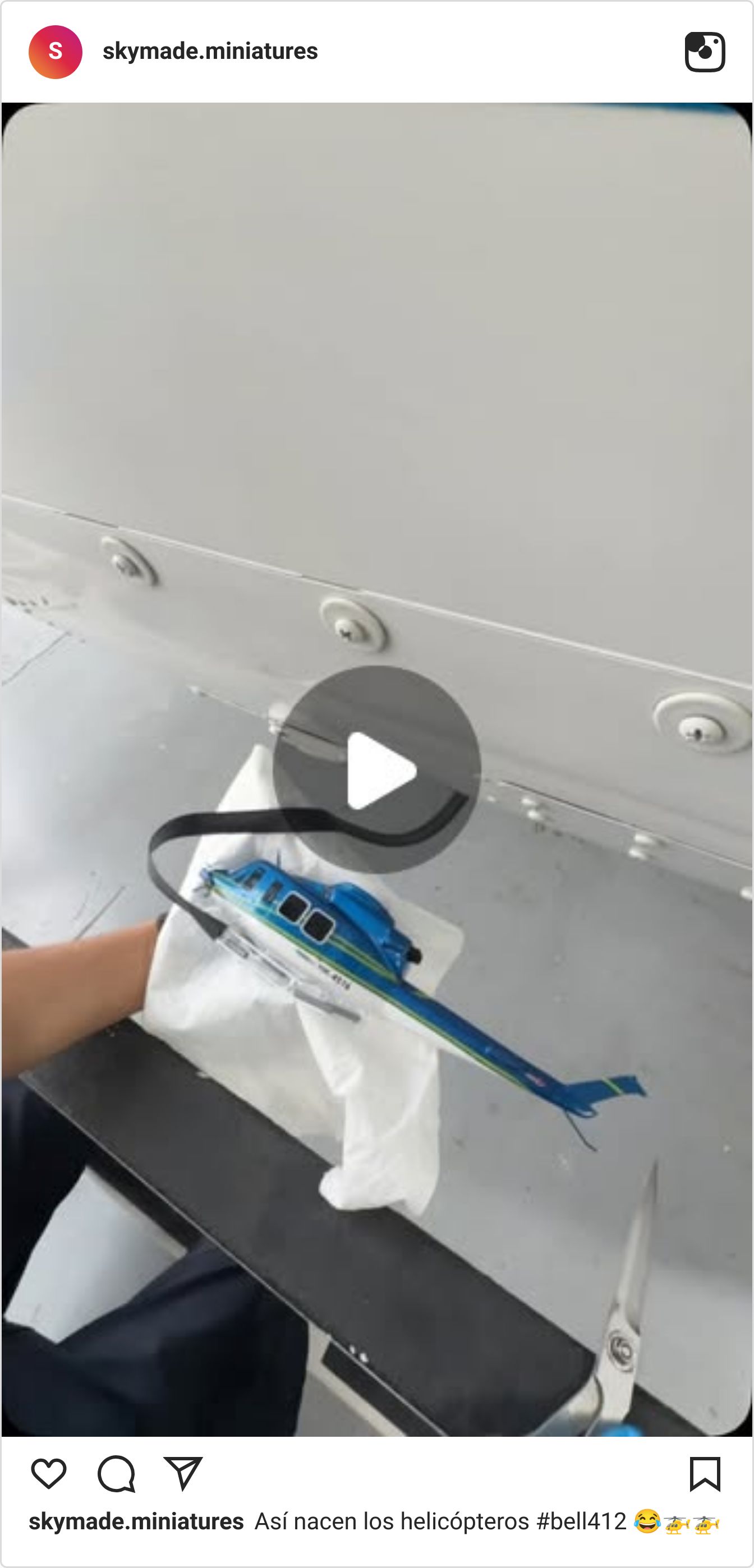
On a lighter note, Jessie brought the most ridiculous video of the week. A full size helicopter appears to give birth to a miniature model of itself, complete with someone cutting what looks like a fuel line umbilical cord. It turns out the clip comes from a company that builds aircraft miniatures, which makes it one of the better pieces of aviation marketing we have seen in a while. Hats off. We laughed multiple times.
🎧 This Week's Episode
Missed the podcast? Catch up on the full episode at the links below! We would LOVE if you would give us a 5 star review, and share with your friends! And if you share a clip, please share the full segment rather than a short out-of-context cut. Context is our friend.
Listen: Apple Podcasts | Spotify | YouTube | Website
Jessie's Links:
Private Aviation Safety Alliance
FlyVizor
LinkedIn
Preston's Links:
Prestige Aircraft Finance
Private Jet Insider (Newsletter)
LinkedIn
X (Formerly Known as Twitter)
FastJets
Disclaimer: The VIP Seat Weekly is for informational and entertainment purposes only. The interview section of this issue summarizes the opinions of guests speaking in a personal capacity. Statements attributed to our guests reflect their views and their own analysis, and are not presented as statements of fact by The VIP Seat, its hosts, or any company named. Descriptions of proposed legislation, pending transactions and company timelines reflect official announcements and published reports, and nothing here is tax or legal advice for any particular situation. The interview was recorded during the same London trip on which the hosts attended the Flexjet Farnborough terminal opening as invited guests of Flexjet. Coverage of publicly traded companies reflects the personal opinions of the hosts and does not constitute investment, financial, tax, or legal advice, nor a recommendation to buy, sell, or hold any security. The hosts are not registered investment advisors and may hold positions in companies discussed. All investments carry risk. Readers should conduct their own research and consult a qualified financial professional before making any investment decision.
